In plastic product manufacturing, assembly quality is closely linked to part design. When ultrasonic welding is selected as the joining method, design decisions made at an early stage directly affect weld strength, appearance, and production efficiency. Therefore, understanding how injection molded parts interact with ultrasonic welding is essential for achieving consistent results.
Ultrasonic welding is widely used across industries such as automotive, medical devices, consumer electronics, packaging, and even food-related equipment manufacturing. For example, enclosures and containers used by a frozen vegetable supplier often rely on ultrasonic welding to achieve clean, secure, and contamination-free joints. With this in mind, proper design becomes a key factor in reliable plastic assembly.
Before focusing on design details, it is important to understand how ultrasonic welding works. Ultrasonic welding joins thermoplastic parts by applying high-frequency mechanical vibration combined with pressure. This vibration generates frictional heat at the joint interface, causing the plastic to soften and fuse.
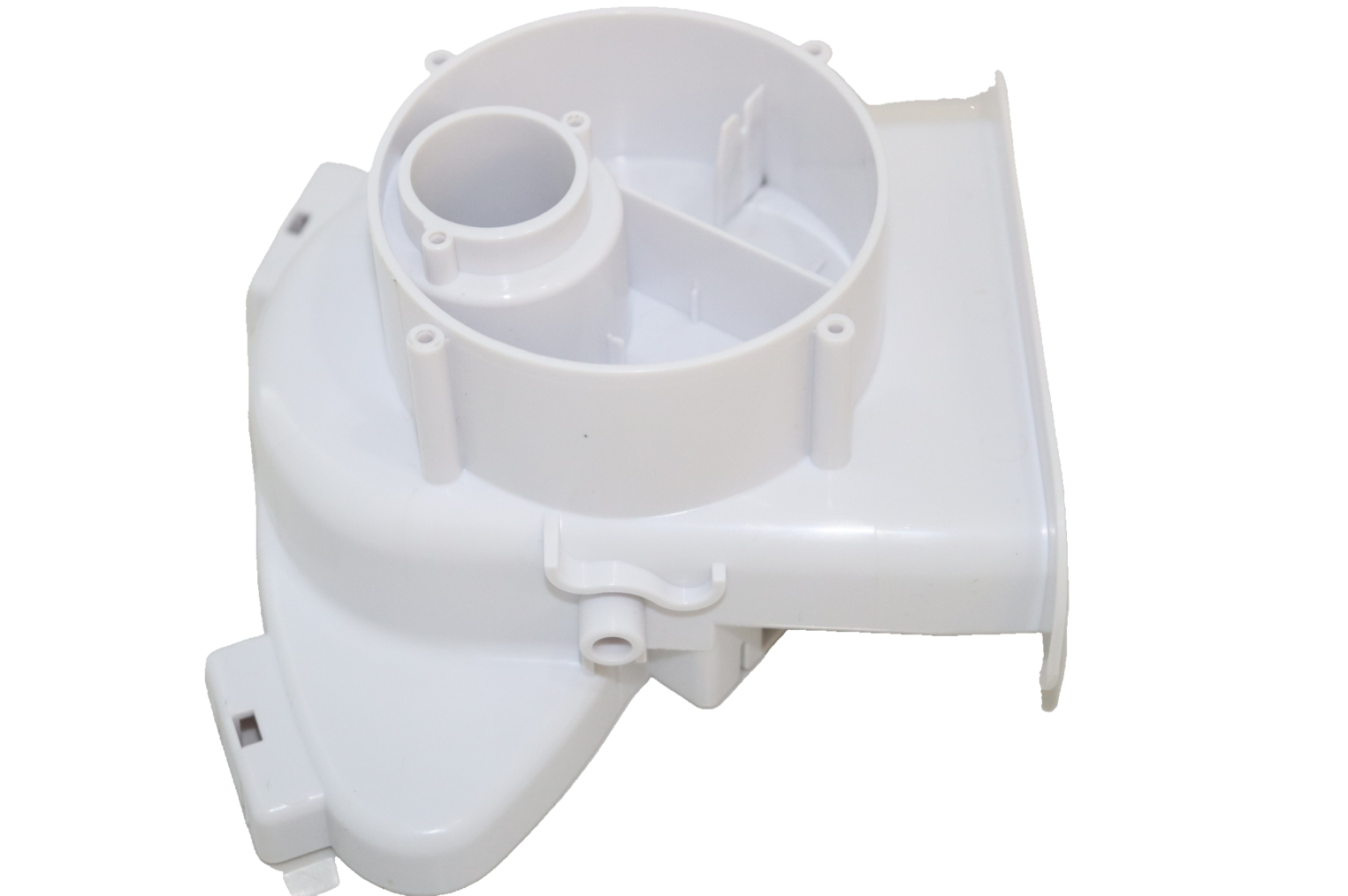
Unlike adhesive bonding or mechanical fasteners, ultrasonic welding does not require additional materials. As a result, it enables fast cycle times, clean joints, and repeatable results. Because heat is generated locally at the weld interface, the surrounding part structure remains largely unaffected. This characteristic makes ultrasonic welding ideal for precision
injection molded parts
.
With the basic principle understood, material selection becomes the next critical factor. Not all plastics respond to ultrasonic welding in the same way, and material behavior strongly influences weld quality.
In general, amorphous thermoplastics are the easiest to weld ultrasonically. These materials soften gradually over a temperature range, allowing controlled energy transfer and stable weld formation. Common examples include ABS, PC, PS, and PPO, which are frequently used in injection molded housings and enclosures.
Because of their predictable melting behavior, these materials are often chosen for products that require high cosmetic quality and consistent joint strength.
In contrast, semi-crystalline plastics such as PP, PE, and nylon have a narrow melting range. As a result, they tend to transition quickly from solid to liquid, which makes energy control more difficult. This does not mean ultrasonic welding is impossible, but it does require more precise joint design.
For applications such as food containers or transport trays used by a frozen vegetable supplier, semi-crystalline plastics may still be selected for their chemical resistance and durability. In these cases, joint design must compensate for material behavior.
Ideally, ultrasonic welding is performed on parts made from the same material. However, dissimilar plastic welding is sometimes necessary. When this occurs, three factors must be considered: glass transition temperature (Tg), chemical compatibility, and melt flow index (MFI).
As a general rule, materials with similar Tg values and MFI levels provide better welding results. Without this compatibility, weld strength and consistency may be reduced.
After material selection, attention must shift to joint design. The primary goal of joint design is to concentrate ultrasonic energy into a small, controlled area. Without this concentration, energy disperses throughout the part, reducing weld efficiency.
A well-designed joint ensures rapid heat generation, consistent melting, and controlled material flow. This is why joint geometry is one of the most important design elements in ultrasonic welding.
To further focus energy, most ultrasonic welding designs incorporate energy directors. These features play a central role in achieving repeatable welds.
An energy director is a small raised feature, typically triangular in cross-section, molded into one of the mating parts. During welding, the tip of the energy director contacts the opposing surface, creating a very small initial contact area.
Because of this concentrated contact, frictional heat builds rapidly, allowing the plastic to soften and flow in a controlled manner. Once melting begins, the energy director collapses and forms a strong bond.
Energy directors should be placed only where welding is required. For parts that require a hermetic seal, such as food packaging or containers used in frozen vegetable supplier operations, energy directors may be placed continuously around the joint perimeter. In other applications, localized energy directors help reduce energy consumption and cycle time.
Building on the concept of energy concentration, different joint designs are used to meet various functional requirements.
Butt joints are simple and widely used, consisting of a flat surface mating with an energy director. Step joints add a locating feature that improves part alignment during assembly. This alignment helps maintain consistent weld quality, especially in automated production environments.
Tongue and groove joints provide excellent alignment and help control flash. Because the melted material is contained within the groove, this design is often used when cosmetic appearance is important.
For semi-crystalline materials, shear joints are commonly used. Instead of relying on an energy director tip, shear joints generate heat through controlled interference between vertical walls. Weld strength is proportional to the overlap height, making dimensional control especially important.
Beyond joint features, overall part geometry also affects ultrasonic welding performance. Uniform wall thickness is essential, as thick sections cool more slowly and can absorb ultrasonic energy.
Sudden changes in wall thickness near the weld area should be avoided. These transitions can disrupt energy flow and lead to weak or inconsistent welds. By maintaining smooth geometry and balanced sections, designers support stable welding conditions.
Even with an ideal joint design, poor alignment can compromise weld quality. Therefore, molded-in alignment features such as steps, pins, or grooves are strongly recommended.
At the same time, tolerances must be carefully controlled. Excessive gaps reduce energy transfer, while excessive interference can cause part deformation. Proper tolerance design ensures that ultrasonic energy is used efficiently and consistently.
Finally, ultrasonic welding should be considered as part of the overall design for manufacturability (DFM) strategy. Mold design, part repeatability, and process stability all contribute to successful welding.
Injection molds with proper venting and consistent cooling help produce parts with stable dimensions. This stability is critical for automated welding processes, particularly in high-volume industries such as packaging and food equipment manufacturing.
In summary, achieving reliable ultrasonic welding results starts long before production begins. Material selection, joint geometry, energy director design, and part tolerances all work together to determine weld quality.
By applying proven injection molding and ultrasonic welding design principles, manufacturers can create plastic assemblies that are strong, clean, and consistent. Whether producing industrial enclosures, consumer products, or components used by a frozen vegetable supplier, thoughtful design ensures long-term performance and cost efficiency.
AAA MOULD
combines professional injection mold design, precision mold manufacturing, and deep understanding of downstream processes such as ultrasonic welding. If you are looking to improve part quality, reduce assembly issues, and achieve reliable plastic welding results, AAA MOULD is ready to support your project from design to production .

RM1223, 12F, No.1, Fuji Bldg, No. 6018 Longgang RD. , Longgang Dist., Shenzhen,China.


Tel: 0086-755-89618186

Contact: Paul Hu 0086-18675501028





 LEAVE MESSAGE